Complex Care Housing
In BC, Housing is a primary social determinant of health. Complex Care Housing (CCH) uses a person-centred, culturally safe, and trauma-informed approach to embed health services into housing.
The CCH Program supports Indigenous people over the age of 19 with severe and persistent mental health and/or substance use challenges. This program uses a person-centred, culturally safe, and trauma-informed approach to embed health services into housing so that clients can build a sustainable foundation to achieve their goals. This program ensures that individuals are safely housed, fed, and medically supported through a strong network of clinical and non-clinical staff.
The Complex Care program is a collaborative funding model supported by two BC Ministries that directly answers the call for appropriate funding for integrated health services. AHMA supports five CCH sites throughout BC, in collaboration with members and Health Authorities in the following locations.
- Surrey (Two sites)
- Prince George
- Victoria
- Vernon
Indigenous-specific complex care supports are connected to an individual, not a location, to ensure reach and maintenance of stability.
CCH is more than just housing; it is a home
CCH participants consistently speak about feeling safe, welcomed, and supported within the home. Clients also describe the importance of mutual support among residents. One participant explained that humour and laughter helped strengthen relationships within the house, allowing clients to understand better and support one another. They did not view it as a clinical space, but rather a home.
Child and Family Reunification
For parents in the program, family reunification with their children is a key self-directed goal, and navigating child welfare systems has created additional stress and uncertainty. In response to these challenges, AHMA’s project sites support family reunification, including:
- Peer support group for parents, whose goal is friendship, mutual support, and shared advocacy as participants work toward reunification with their children.
- Support with parenting skill development through workshops and parenting groups.
- Positive family experiences such as a water park, indoor playground, and birthdays.
Healing and identity through Indigenous Culture
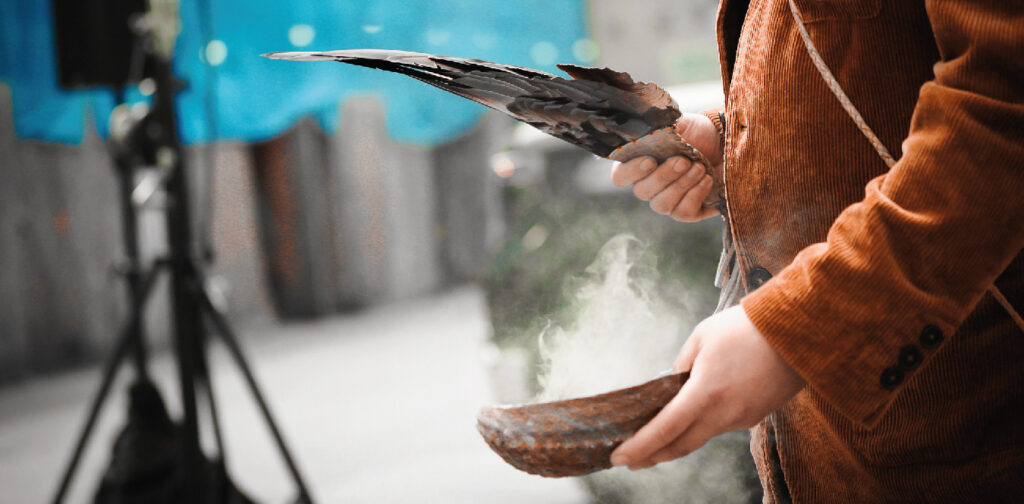
Reconnecting with Indigenous identity and culture is a central part of the healing journey for many CCH participants. One participant, who had experienced the Sixties Scoop, homelessness, and substance use, described finding “an Indigenous place where everyone is like me.” As part of the initial assessment, staff can use the Medicine Wheel to identify pathways for each person, including the physical, emotional, mental, and spiritual aspects of healing.
Trusting relationship with Physician and Psychiatrist
Before entering the CCH program, clients struggled to access timely, high-quality healthcare. A major accomplishment of the program so far is that all CCH participants are connected to a Physician (and Psychiatrist if needed) and 24/7 care from on-site healthcare professionals. There have been no deaths in the program. All clients now have access to specialized healthcare that they would not otherwise have been able to receive. This represents a fundamental improvement in access to medical care through trusted, dedicated physicians. Many clinical issues have emerged only through the trusted relationship with physicians, which would have otherwise gone untreated or noticed.
Client Empowerment and Independence
AHMA’s approach to client empowerment has created a positive environment for participants who report increased pride, confidence, and independence. Consider the following examples:
- One client signed up for a literacy program and is learning how to read and write. Now they also want to learn more math skills to manage their own money. They recently set up their own bank account and are learning about personal finances. They are putting money in a savings account.
- Another client is looking to transition from the program. Staff are assisting with the housing application interview and attending potential housing options.
- One client identified that driving a car was important to their independence. Staff supported them through their driving lessons, and now they have a license.
Relationship and community building
As a result of connections into the community, many clients are now seeing improved social connections and engagement with the wider community. Whereas previously participants were isolated and ignored, in many cases, they are now building relationships with people in the community. They now report feeling much more comfortable and included in the community.
Reciprocity
Clients also described the importance of giving back as part of their own healing and supporting personal goals. One successful program participant, who now volunteers as a ‘house auntie’, provides social and peer support to current residents. This former client explained that it “feels good to help, because it is healing,” and wanted to provide the kind of peer support they felt had been missing when they first entered the program. Their experience demonstrates a unique model that creates opportunities for former clients to support others while continuing their own healing journey.
CCH Empowers Healing
“We’re nations within a nation. But we can set the terms of this lodge in our community of women and staff and team. And it’s groundbreaking.”
 CCH Staff
“There is a sense of calm usually in the house—the staff and women in the house are very welcoming.”
 CCH Participant
“This is the first place I’ve felt safe in a very long time—it is hard to be inside and live indoors after living outside.”
CCH Participant“When I’m supporting the clients, I’m thinking about empowering them. That’s the goal of the program is to strive towards independence.”
CCH Staff